Blog › 2026-09-29
How Can a Chinese Factory Supply New Zealand Supermarkets?
CHGONZ · POWERED BY CHINANo NZ company, no staff on the ground — a licensed local importer handles compliance and payment, so the factory can focus on the product.
One-minute summary
- ✓ Foodstuffs’ new-supplier channel is for New Zealand-based businesses only — overseas factories need a local importing entity.
- ✓ Over 80% of NZ grocery retail sits with Foodstuffs (North and South Island) and Woolworths — three separate buying organisations.
- ✓ The importer is legally responsible for food safety: labels, GS1 barcodes, recall process and insurance must all be in place.
- ✓ The supermarket pays the NZ importer in NZD; the importer pays the factory’s corporate account by bank transfer under contract.
- ! Nobody can guarantee a listing. What we can do is get you ready enough that a buyer takes you seriously.
Can a Chinese factory supply NZ supermarkets directly?
Not through the standard channel. Foodstuffs states its new-supplier application is for New Zealand-based businesses only, with international companies directed to category teams during NPD windows. NZ law also requires a food importer to be a NZ resident or company, legally responsible for food safety.
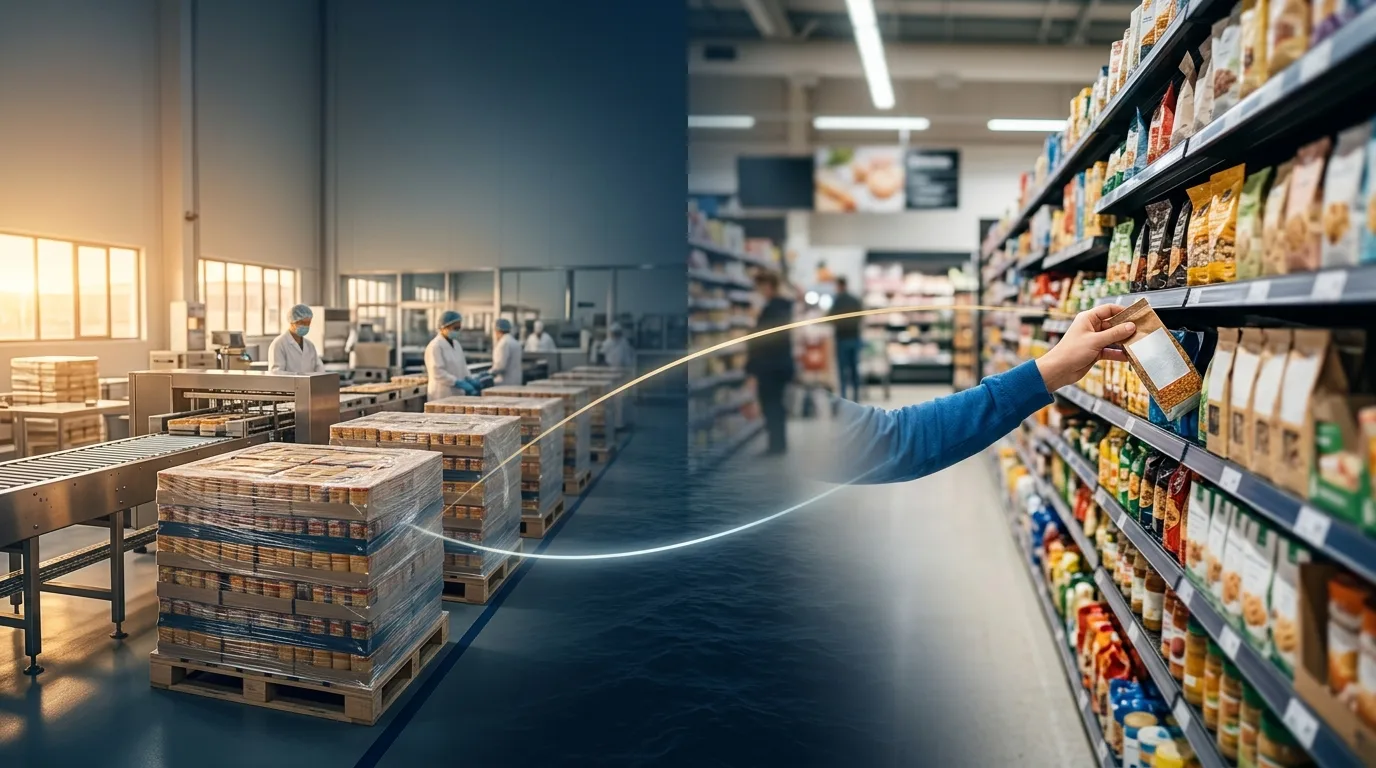
The realistic path: the factory owns the product and capacity, while a registered NZ food importer acts as the supplier entity — handling onboarding, contracts, compliance and logistics.
It isn’t an extra middleman; it’s a role NZ rules require. The only question is whether you set it up yourself or use a team already doing it.
Without a NZ company, who acts as the importer?
FG NZ Trade & Logistics Ltd, the New Zealand entity behind CHGONZ, can act as your importer of record — registered with NZ Customs and MPI, with Auckland warehousing, handling clearance, label compliance, storage, distribution and supermarket liaison.
| What you don’t need to do | What the local importer covers |
|---|---|
| Register a NZ company or open a NZ bank account | Local legal entity and NZD receiving account |
| Register as an MPI food importer | Existing importer registration and compliance responsibility |
| Station staff in NZ | Local communication, samples, replenishment, after-sales |
| Build your own overseas warehouse | Auckland storage and delivery to supermarket DCs |
⚠ We are not an official agent of Foodstuffs or Woolworths and cannot guarantee ranging. We provide a local entity, import credentials, warehousing and logistics, and hands-on knowledge of supermarket preparation.
How many supermarket groups are there, and which comes first?
For suppliers, there are three independent buyers: Foodstuffs North Island, Foodstuffs South Island and Woolworths New Zealand. Pitching one proposal to the whole country is the most common first mistake.
| Buyer | Banners | Scale |
|---|---|---|
| Foodstuffs North Island (FSNI) | New World, PAK’nSAVE, Four Square, Gilmours; private label Pams | 330+ stores · ~3m shoppers a week |
| Foodstuffs South Island (FSSI) | New World, PAK’nSAVE, Four Square, Trents | 187+ stores · ~1.5m shoppers a week |
| Woolworths New Zealand | Woolworths, FreshChoice, SuperValue | Buying fully separate from Foodstuffs |
The two Foodstuffs co-operatives are independent — not head office and branch. Imported products map to the North Island’s International Range; new suppliers usually start in International or Local ranges, build sales data, then push higher.
Together the two groups hold over 80% of NZ grocery retail (Commerce Commission annual grocery report, 2026). Win one and you have a business; win none and you have no mainstream retail channel.
👉 Ranging tiers and pricing structure in depth: How Chinese suppliers get into NZ supermarkets
What compliance do NZ supermarkets require?
Six essentials: GS1 barcodes (GTIN), a GS1 product recall process with a completed mock recall, an English Nutrition Information Panel, evidence for every claim, production and import documents, and public/product liability insurance.
Three traps for factories:
1. Packaging must be redone. NZ retail packs must be in English with ingredients, a “Contains” allergen statement, date marking, net weight, lot number and an Australian/NZ supplier name and physical address (a PO box doesn’t count) — that’s the local importer.
2. Verify barcodes before printing. Each pack size needs its own GTIN; get GS1 interim verification before finalising artwork, or risk reprinting a whole run.
3. Back every claim. “Organic”, origin or functional claims all need a certificate or test behind them.
How does the payment get back to China?
The supermarket pays the NZ importer in NZD on its trading terms; the importer then pays the factory’s corporate bank account by wire transfer under the purchase contract, with contract, invoice and export declaration all matching.
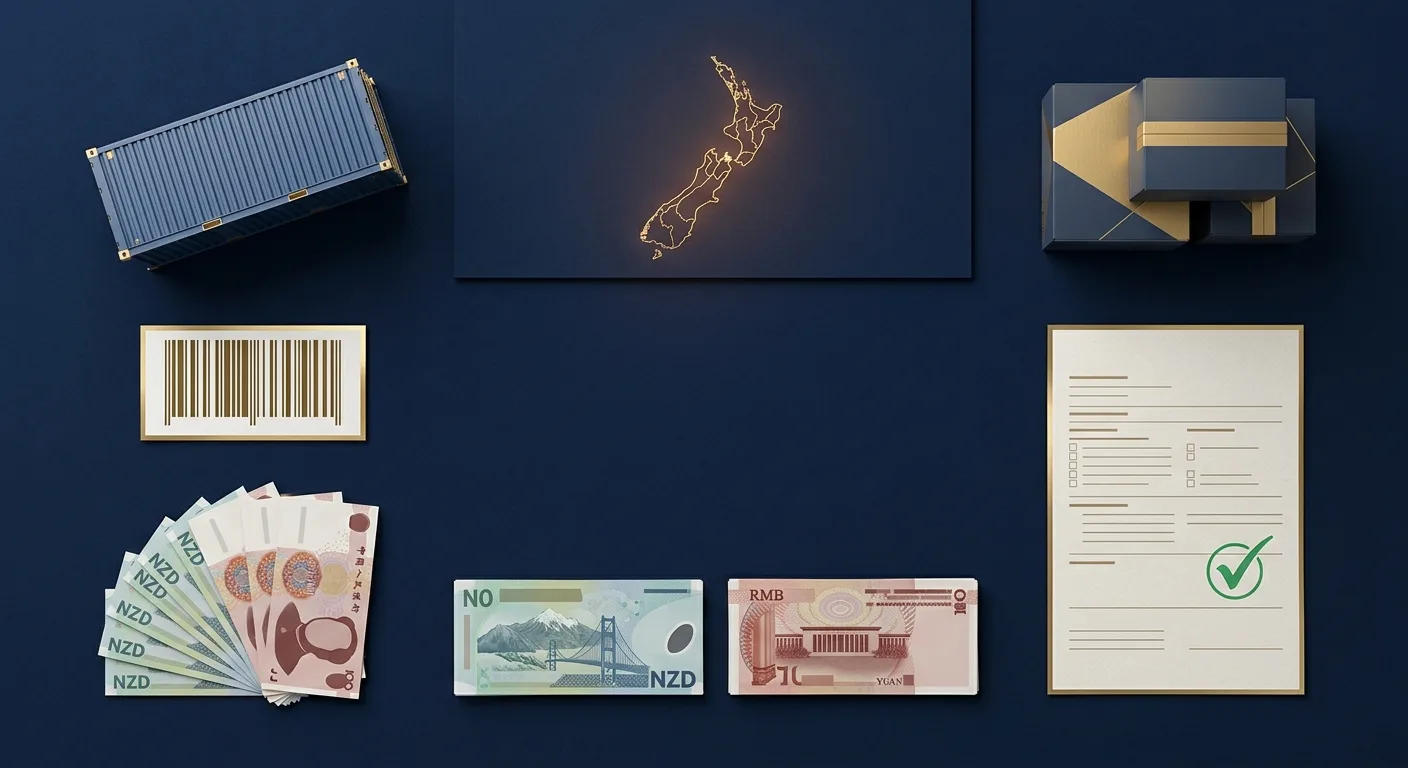
No overseas account: no NZ bank account or NZ tax filings for the factory.
Clean paperwork: built on a proper trade contract and export declaration, supporting the factory’s export FX receipts at home (subject to its own bank and FX requirements).
Flexible terms: outright purchase, or staged shipments and payments — agreed case by case by category and volume.
⚠ We do not offer any payment route outside the banking system. All payments go through regulated banking channels.
How long does it take to get ranged?
At Foodstuffs North Island, onboarding after category approval (supply contract, verification, vendor number, article creation) takes about 6–8 weeks. Add packaging changes, GS1 verification and sea freight, and plan for 4–6 months overall.
The most common scheduling mistake is leaving just one month between the first meeting and the shelf. Get packaging, barcodes and compliance documents ready first, so negotiations don’t stall.
Quick self-check: are you ready?
- Is your product Good, Better or Best on the shelf?
- Do you know the shelf prices of three competing products?
- Does your price leave room for promotions, distribution and retail margin?
- Can you supply consistently, and will shelf life survive sea freight?
- Are you willing to redo packaging for NZ?
If you can answer three or more, let’s talk. If not, we can help you work through them first.
Want your product on NZ supermarket shelves?
Send us your product details for an assessment. We are a local NZ importer, not an official supermarket agent, and cannot guarantee ranging — we make sure your product reaches buyers compliant and ready to be seriously evaluated.
FAQ
Can a Chinese factory supply NZ supermarkets directly?
Not through the standard channel. Foodstuffs’ new-supplier application is for NZ-based businesses only, and NZ law requires a food importer to be a NZ resident or company. The practical route is a licensed local importer acting as the supplier entity.
Can I get into NZ supermarkets without a NZ company?
Yes. A local importer covers import credentials, clearance, label compliance, warehousing and supermarket liaison, while the factory handles product and supply.
How is payment returned to China?
The supermarket pays the NZ importer in NZD, and the importer pays the factory’s corporate account by bank transfer under the purchase contract, with matching contract, invoice and export declaration.
How long does ranging take?
After category approval, Foodstuffs North Island onboarding takes about 6–8 weeks; with packaging, GS1 verification and freight, allow 4–6 months.
Can you guarantee a listing?
No — and nobody can. We provide the local entity, import credentials, logistics and preparation so buyers will seriously evaluate your product.